Integrated Rural Development in Mountainous Areas in Northern Lao PDR (RDMA)
Most rural households in the mountainous areas of northern Laos engage in a wide variety of on-farm and off-farm activities, combining hunting, fishing and gathering with agriculture, horticulture, animal husbandry and forestry. Shifting cultivation is the dominant mode of agriculture in the hills. With long fallow cycles, this rotational system provides stable upland rice yields and plenty of wildlife and Non-Timber Forest Products (NTFPs), which thrive in the regenerating forest fallow. Due to population growth, however, fallow periods are declining rapidly, resulting in increased weed growth, poorer soils, lower rice yields, increased erosion and a decline in NTFPs. The Government tries to end shifting cultivation by resettling villages in valleys, introducing land allocation programs and promoting permanent agriculture. But the program is not very successful because the rural population is not sufficiently involved in the process. Opium production and addiction remains a problem and alternative sources of income have yet to be developed. Since there is practically no processing industry in the country, Laos has become a cheap source of unprocessed raw materials for the neighboring countries, especially for Thailand and China.
The German Agency for Technical Cooperation, GTZ, carries out the Programme Integrated Rural Development in Mountainous Areas in Northern Lao PDR (RDMA) in the provinces of Bokeo, Luang Namtha and northern Sayaboury. The programme activities are grouped under the components:
Social Development,
Economic Development,
Natural Resources Management,
Rural Infrastructure.
Institutional Development and Capacity Building.
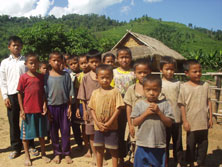
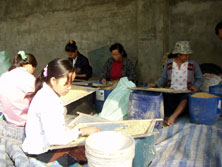
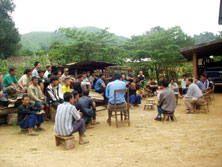
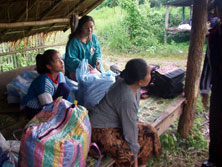
The programme’s target group consists of poor and food insecure households living in the upland and lowland areas including those that have recently moved from the remote uplands and resettled in more accessible areas. Women are an important part of the target group because of their disadvantaged position in the society and their important role in productive and reproductive activities. The intention of the programme is to diversify the agricultural production in the target (ethnic minority) villages to increase rural incomes, reduce the necessity of slash-and burn farming systems and to offer alternatives for the production of opium.
Ulrich Helberg carried out several studies in the three provinces with the aim to develop the NTFP and special agricultural crops sub-sector, and to make recommendations regarding processing and marketing of the products.