Roses for Nangarhar
The project “Roses for Nangahar” is carried out by the NGO German Agro Action (Deutsche Welthungerhilfe) and is ingrained in the EC supported measure “Project Alternative Livelihood/PAL” in East Afghanistan, managed by the German GTZ-IS.
For many years poppy (opium) cultivation has been the only income generating activity of the rural population in the region. In Afghanistan planting of crops is constantly competing with the overwhelming revenues coming from poppy cultivation. All new crops must be economically advantageous and convincing to farmers. It has to be recognised that poppy cultivation is extremely work intensive and all family members are obliged to work most of the year for the output. The introduction of the high value oil roses (Rosa damascena) may fill the gap between workload and income.
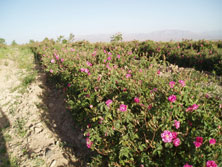
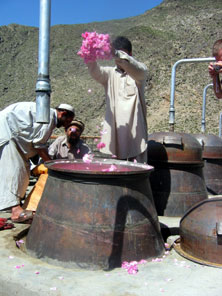
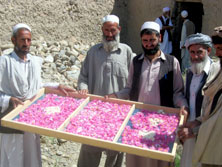
The purpose of the project is the livelihood improvement and strengthening of the economic basis of the rural population in Nangarhar Province and to develop alternatives for the increasing poppy cultivation. Based on organic land use methods oil roses are cultivated by small-scale farmers and processed into rose oil (used in many valuable perfumes), rose water and dried rose petals.
Some 200 family farms are cultivating oil roses on currently over 40 hectares according to international organic standards. Cultivation and processing is inspected and certified by a recognised European certification body. A major German natural cosmetic company, which had originally initiated the project, has become an important buyer for the rose products. The value-added oil rose products have a high market potential, especially for the natural flavour and fragrance industry.
Ulrich Helberg has assisted the project in developing an organisational setup for the privatisation of the project and has carried out a market study for rose oil products.